Housing insecurity, racism, poverty, the healthy development of young people, social identities, the building of community, our environment – these have all played parts in shaping who I am at 75. I have not just studied these, but I have contributed, protested, taught, and labored to address them. But my relationship to war has lately felt more pressing, insidious, and ubiquitous. Unlike the other contributing influences on my makeup, I feel like war has been a quieter malefactor.
Both my parents were born during the Mexican Revolution (1910-1920), World War I (1914-1918), the U.S. occupation of Haiti, the Cuban Civil War, the U.S. occupation of the Dominican Republic, the Russian Civil War, and many other international conflicts involving the U.S., Poland, Russia, Germany, and Ireland – the native lands of their parents and grandparents. I do not know the specifics of how these armed conflicts shaped their lives, and thus mine, but I am left wondering if there was some ensuing push toward assimilation, avoidance, or tribalism that just felt like our family when I experienced it decades later.
I recall that I was encouraged to feel pride that Israel and I are the same age. However, that pride didn’t extend to anyone explaining to me my grandfather’s use of Yiddish or my mother’s Jewish heritage.
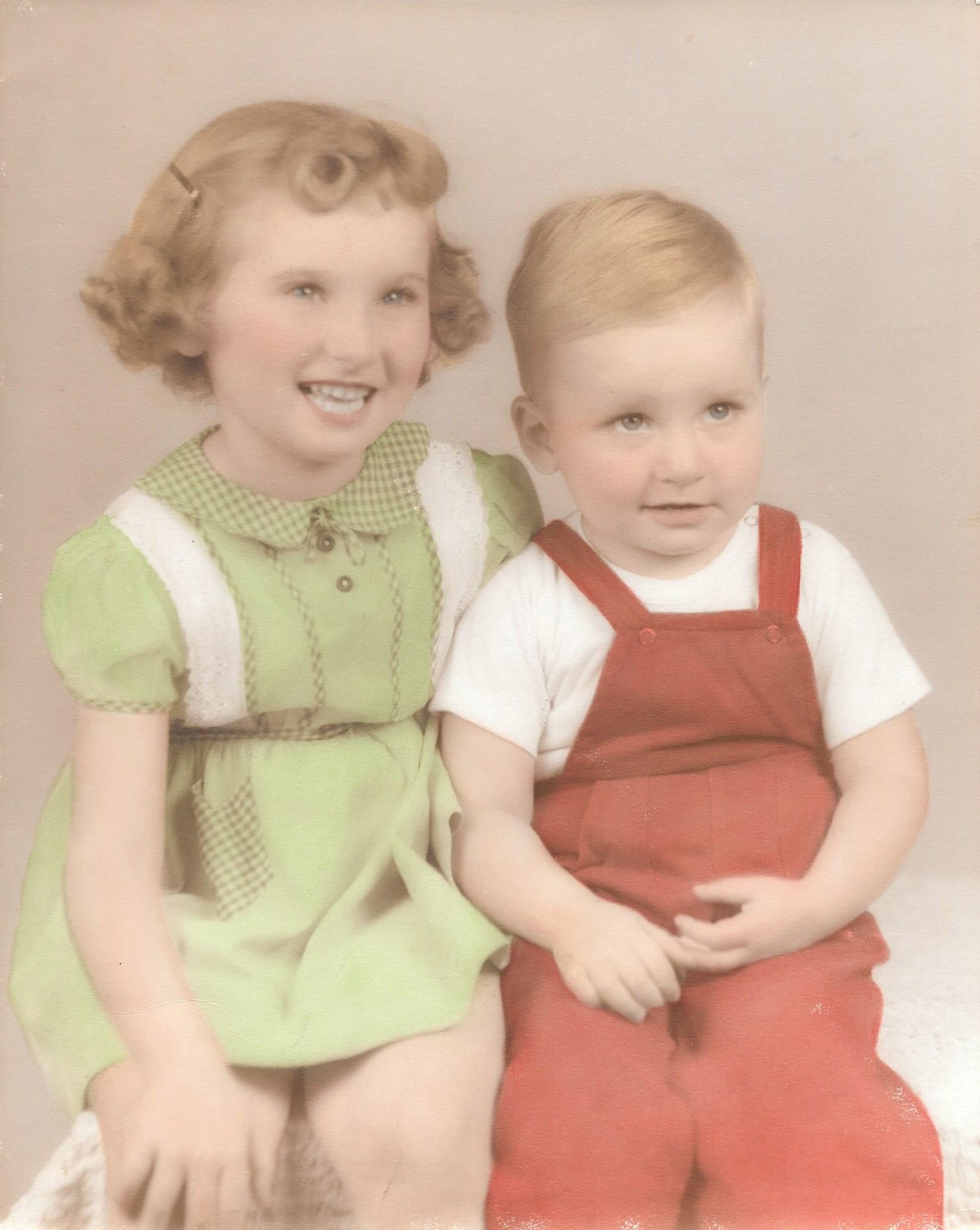 My two oldest siblings were born in close succession after my parents married just before World War II (1939-1945). My other sibling was born in the last year of the war; I was born four years later. For decades I wondered about the seven-year gap between the birth of the second and third child in my family. Only recently did I recognize the likely influence of a global war. This recognition led me to reconceptualize the upheavals in my parents’ employment. My dad trained to be an accountant, but by the time I was born, he was a laborer and maintenance worker who helped people with their taxes as a side hustle. My mom, who left school at 15, worked in a bank. But before I was born, she worked in a knitting mill and a glove manufacturing company, both part of the industrial war machine in Milwaukee where military uniforms and boots were made in abundance.
A big swath of my childhood city was devoted to clothing the military and making munitions and equipment. Along the lakefront and stretching inland along rivers, large factories produced the stuff of war. Some still do, but quietly now. This backdrop of silent participation in war paralleled my family’s; I believe two of my father’s nine siblings were veterans. So was a much older cousin on my mother’s side. But nothing was offered by way of explanation for how their lives were attenuated or why they were the sole canvasses for tattoos in our large family.
 When I was two years old, the Korean War took between 2.5 and 4 million lives, disrupted the lives of millions more, and fostered an economy in my city. My oldest sister dated a soldier who would later only talk about the adventures of life in the Bering Straits, not about why he was there. I now find it interesting that I was born in the Dairy State, in Cream City (named for the color of bricks used in our early buildings), and the beer capital of the nation, with no mention of our obvious multiple connections to warfare.
When I was required to register for military service in 1966, I was preparing to attend college, the first and only person in my immediate family to do so. In my freshman year, all male students were required to participate in the Reserve Officer Training Corps (ROTC), a program developed in part as a condition for funding as a land grant college. I don’t recall how long I was required to participate, but I did comply for the required time while simultaneously becoming committed to anti-war beliefs. It seems to me that the experiences of ROTC had as much to do with my becoming a conscientious objector to the War in Vietnam as was my participation in anti-war demonstrations.
Months later and regularly after that, I had to go to U.S. military offices in Milwaukee’s Third Ward – an area that until just years earlier had been the site of manufacturing for military uniforms – to be verbally and emotionally harassed by army personnel for my beliefs and convictions. Particularly galling to them was my unwillingness to claim a religious explanation for my objections. But they were also baffled by my refusal to identify as a pacifist, explaining that I would fight vigorously for just causes. Eventually, a lottery eliminated my deferment as an objector and as an educator. I got called up. An hour or so into my physical, I was given a 4-F status because of the military bias against my sexual orientation. I didn’t feel victorious. I felt cheated out of my justified refusal to join.
Since Vietnam, there have been wars in Uganda, Yemen, Iran, Iraq, Sudan, Ethiopia, Somalia, Granada, Senegal, Panama, Saudi Arabia, Egypt, Kuwait, Congo, Afghanistan, Ukraine, Azerbaijan, and many more counties and territories. Despite the background hum of reports about the disregard for the lives of “women and children,” atrocities continue to be perpetrated by all sides.
 From torture and cluster bombs to bone crushing famine, our world economies are fueled by war. On one hand, we espouse the need to reduce the use of plastic to preserve our oceans while we throw millions upon millions of tons of fossil fuels into the atmosphere with the goal of annihilating other humans. We listen with quiet tears to lovely boys’ choirs singing holiday favorites while we watch their age mates being enlisted into combatant groups in former colonies. Our popular sitcoms have soundtracks that simulate the oohs and aahs of appreciation for children on screen, but we have industries now producing more child-sized, robotic prosthetic limbs.
In the U.S., our media, legislators, and elected officials continue to participate in the Red State/Blue State bullshit that fuels what feels like fodder for another civil war. Our courts remain beholding to munitions manufacturers as they support widespread gun ownership at the expense of human safety in community.
As Cornel West suggested in his definition of terms, we have no cause for optimism in the face of the greed and competition that fuel wars. But we may have hope, the hope borne in a reality that putting our shoulders together we may find peace if we decide in concert to do so. We may again attend to housing, equity, health, society, community, and our environment.
Maybe, as I begin my 76 year, we will.
 Creating Community for Everyone