He was thin – too thin – for any weather, but on the morning of New Year’s Eve Day, he shook under a Red Cross blanket, wearing a t-shirt and jeans, soggy socks, his feet pushed into yellow slides so small that the last three inches of his feet hung behind their soles. He had to tiptoe across the platform of the Chicago L station, a surface already slick with the light snow that was blowing around our shoulders and into our faces.
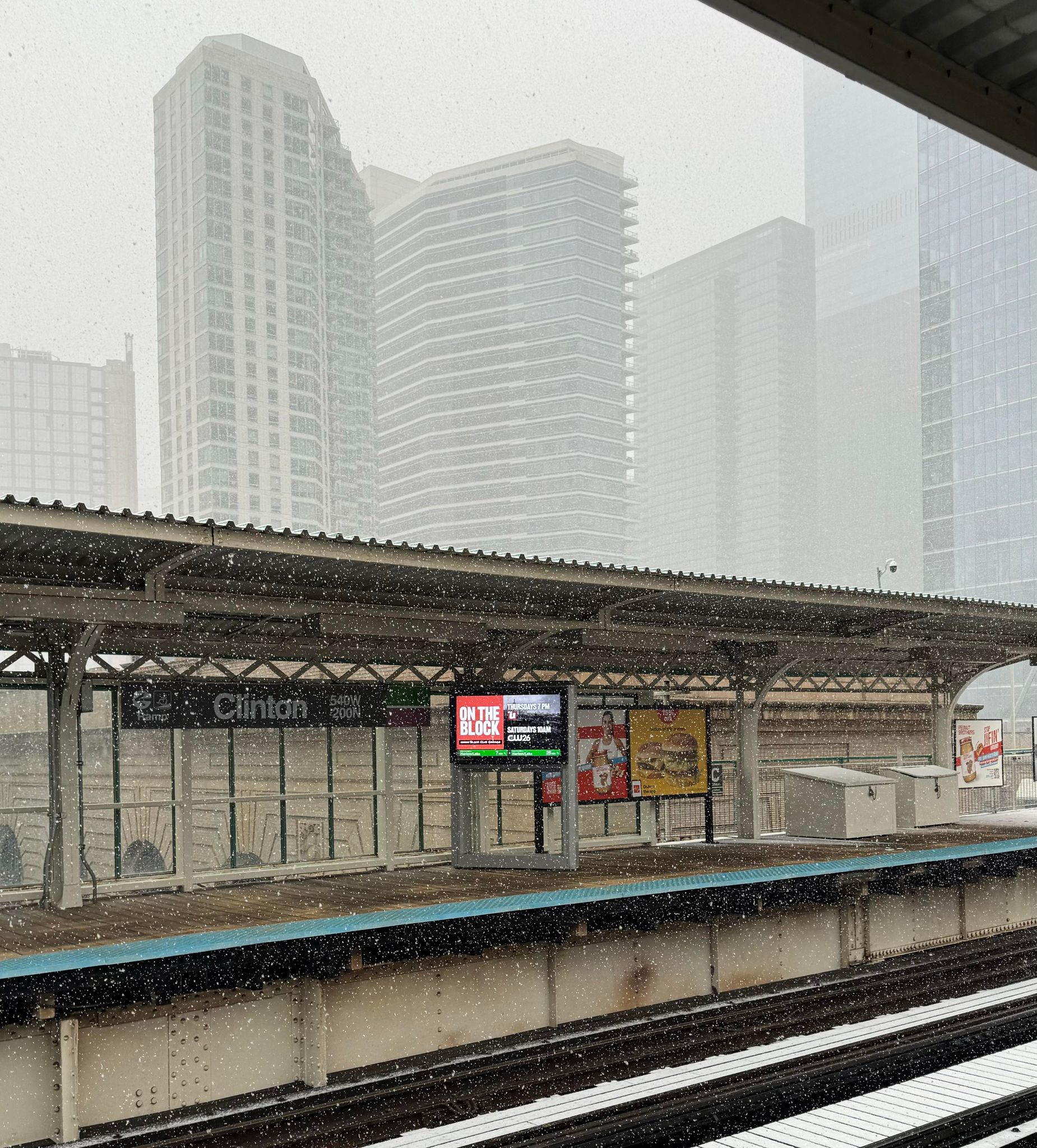 He approached my friend with his phone extended in his hand, screen facing outward in that universal gesture of need. Moving him along to the large map of L stops, my friend did his best with his limited Spanish and lots of pointing to the images on phone and poster to make it clear he needed to get to the other platform. As our train approached, I stood at the edge of the line drawn for our safety, watching him, now across the tracks from us, his exhaustion all too apparent to anyone looking. Before the train blocked my view, I raised my right hand at the elbow and nodded. He nodded back and waived. Our eyes locked.
This youth from Venezuela woke me up a few times last night. I could not stay asleep with him on that platform in too small slides and no hat or gloves. After being jolted awake several times, I finally stopped trying and let the others into my bed as well, first one at a time, then thousands.
The two teens, bare foot and wrapped in blankets over underwear heading to the Amtrak train to Milwaukee, tickets put into their hands by someone who needed these boys to get back home or at least out of Chicago.
The girl sitting next to the window, wrestling with her bra under a sweater, pulling tags off clothes stuffed in a plastic bag, ultimately changing everything, including her panties and shoes. She left them on a heap on the floor when she exited the train in heels and make-up quickly applied near Sturtevant.
The Peruvian mothers at corners along State Street, sitting on cold pavement, legs stretched out in front of them, usually with a toddler on those legs or in their arms. A box of candy bars at their side, candy that we buy to sweeten the transaction that reeks of indifference.
Aaron, the man outside Dunkin’ Donuts, the guy who stands up to embrace me as I exit with cash for him.
Sue’s family, who somehow managed to get a spotless, uncreased holiday card into my hand outside the train station. He’s brought the card for days, anticipating my arrival.
The roofers two blocks over, working from dawn into the night, sometimes in the rain to finish a project in two days or less. Roofers with no English, some still not shaving.
The guy spinning in front of me, taking off his clothes as he turns into the street in the path of a bus, its riders in Vancouver hitting their heads on the seatbacks in front of them.
The teen standing on one leg between two houses as they shuck the clothes that they wore when leaving the house, no longer a boy, but now more complete as a girl.
The girl who needed a veggie burger but bungled its transfer to a table in the cafeteria, crying because she feared there would not be another for her with no money to spend.
The large boy, walking so slowly to school, late again. He does not seem to notice that he gets there every day, book bag full on his back.
The much younger brown boy, his hand politely raised to participate in the activity of planting a tree. He is ignored at first, then hushed, even though he didn’t make a sound.
His enthusiastic classmate got cautioned that she’d be sent back to her classroom if she didn’t sit still.
That girl separated from her mother in the Darien Gap because the woman feared they would not make it together given her own inability to walk any longer, choosing to send her daughter ahead with a stranger, hoping she would survive and forgive her mother.
The limbless children playing with shell casings in the streets where they were bombed.
Small ones bedwetting in terror long after the shelling has stopped.
Eastern European families whose fathers will not come home or won’t be the same again.
Israeli and Palestinian children who will not recognize peace, having been made to understand that bomb shelters and “shelling” with “rockets” are normal.
Families hearing that hostages would be exchanged for prisoners, fully knowing that the hostages were imprisoned, and the prisoners, held hostage.
Still other families in the United States hearing that childhood poverty had been halved during the pandemic, while wondering which half they were in and why there would be a celebration for simple decency.
Elders and families in California’s church parking lots, having lost their housing; congregations, opening restrooms to help them out.
The woman sleeping in the employee lounge.
The clerk at the dry cleaners picking up a shift, rounding out her 18-hour workday.
The one who rents a storage space in which to live.
These people and many more kicked me out of bed at 4:30 this morning. They whispered that our concern for “women and children” is a lie. They demanded of me a definition of innocent.

