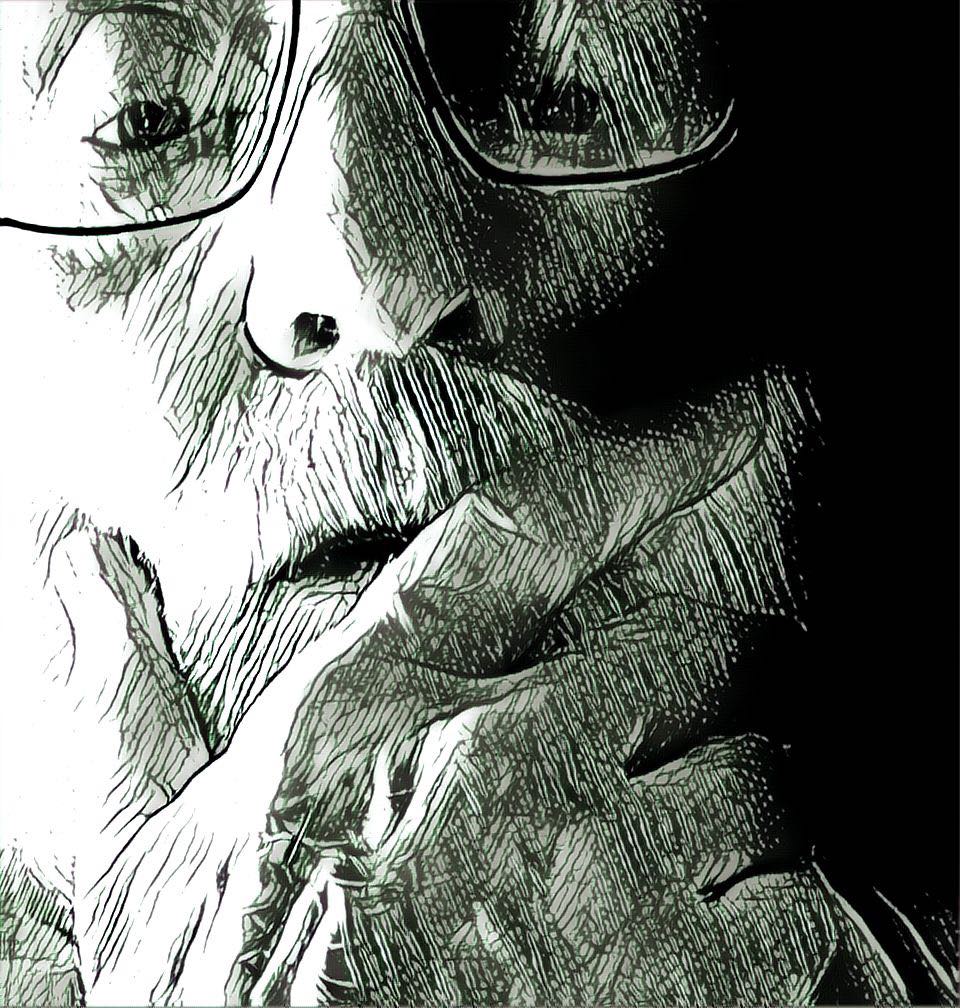
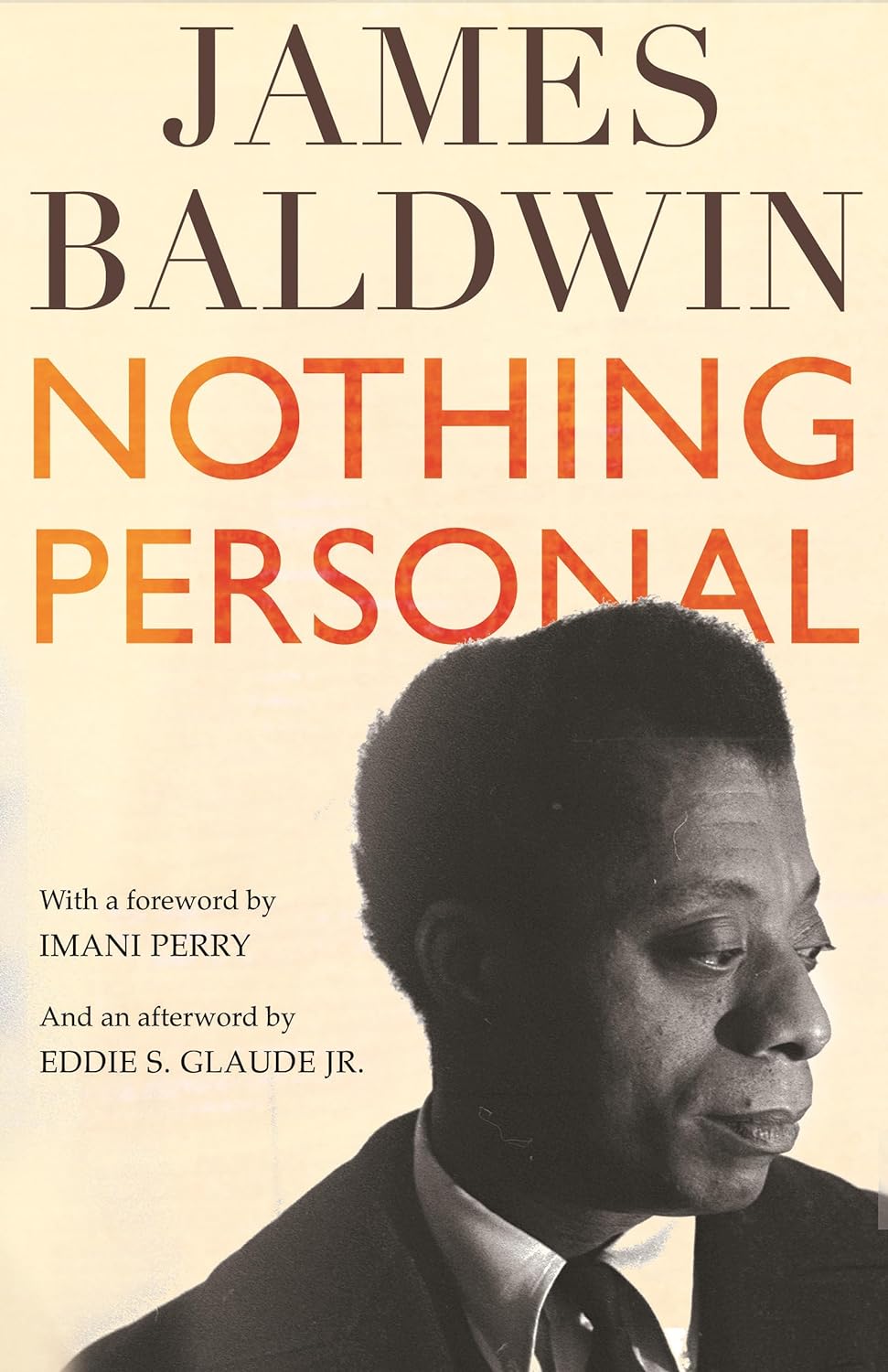
 In early-February, I stopped at my local public library to see if there was a copy of Nothing Personal by Richard Avedon and James Baldwin available. There I learned that a single copy was in the stacks of the Central Library, but only for viewing on site. A week later, I went with my buddy Frank to see the book. Though I had been reading every day from an edition of the work that didn’t have the Avedon photographs, I was not really prepared for what I saw when we paged through the book together.
After about 20 minutes of being shuffled from one librarian to another and waiting for the book to be delivered to us: full page photos of wedding portraits, the Everly Brothers, Marilyn, Wallace, the head of the American Nazi party, Bertran Russell in silhouette so close that hair on his ears stood out – these all confronted me in unexpected ways, possibly because with the undefended attention from Frank I was open to seeing them. But I suspect that I was also vulnerable to them because I knew well the words that were to follow:
It has always been much easier (because it has always seemed much safer) to give a name to the evil without than to locate the terror within. And yet, the terror within is far truer and far more powerful than any of our labels: the labels change, the terror is constant. And this terror has something to do with that irreducible gap between the self one invents – the self one takes oneself as being, which is, however and by definition, a provisional self – and the undiscoverable self which always has the power to blow the provisional self to bits.
For four months now, I have been working on a neon project which is a self-portrait of sorts. From welding glass tubes together and heating them to near liquid to shaping them to a pattern of my making, this project – still far from complete – drove me to read Baldwin during Black History Month. Having recently listened to Eddie S. Glaude, Jr., I felt a deep dive into his work would guide me through the month.
I never got past Nothing Personal.
The book has become my companion, my daily meditation, my metaphor for change. At 75, I am not re-inventing myself so much as acknowledging the multiple inventions that have come before. It has had me reassess the sleepless nights that have caught me by surprise. It has put into focus the bursts of energy and creativity that I have felt. It has had me examine what has propelled me and the shortcomings of that propulsion. Baldwin reminds us:
It is perfectly possible – indeed, it is far from uncommon – to go to bed one night, or wake up one morning, or simply walk through a door one has known all one’s life, and discover, between inhaling and exhaling, that the self one has sewn together with such effort is all dirty rags, is unusable, is gone: and out of what raw material will one build a self again?
Decades of counseling have been incredibly valuable to me, but they have not as clearly framed this difficult question for me, for us. Contemporary capitalism would suggest that newer “rags,” carefully curated, differently styled will produce someone who can stand in for a self. Think of the notions, lotions, and potions devoted to looking good, staying slim, disguising blemishes, or denying the realities of aging bodies in toxic environments.
 The time and resources devoted to these displays will not resolve the “terror within,” nor do they challenge the habit of misunderstanding the “evil without.” I would suggest that as a nation consisting of mostly immigrants, we look ridiculous in our expression of outrage over newer immigrants. How do indigenous peoples or descendants of those brought here against their wills understand this “crisis at our southern border?” How do unhoused people under bridges understand our chronic chorus of “think about the women and children?” How do we applaud tax exempt billionaires when they contribute a million dollars to charitable causes in exchange for naming rights?
In my decades of seeking to understand myself and others, I have also noted my parents did the best that they did, eschewing the expression that they did the best that they could. I saw them in many situations doing much better at work or church than they did at home. Similarly, I have railed against the childhood song I’m a little teapot – a ditty that for millions went in one ear and right into the subconscious, imprinting in me a fight against my own powerlessness as a child and suggesting that the only way to address a now chronic position of usefulness is to get angry.
As I wrap up my observance of Black History Month and continue the journey of completing a self-portrait in neon, I feel profoundly grateful to James Baldwin and those who keep his genius alive. His assertion that we must look to the terror within is both alarming and a balm. I am in awe of his articulation of the question: Out of what raw material will one build a self again?
The lives of men—and, therefore, of nations – to an extent literally unimaginable, depend on how vividly this question lives in the mind. It is a question which can paralyze the mind, of course; but if the question does not live in the mind, then one is simply condemned to eternal youth, which is a synonym for corruption.
 Creating Community for Everyone
wow!! 25Flying in the Wind
LikeLike